
Proprioception: Understanding Your Body Without Looking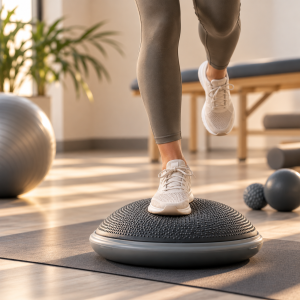
Have you ever walked up the stairs without looking at your feet, or picked up a cup without needing to watch your hand? These everyday activities rely on a sense called proprioception — your body’s ability to recognise where its different parts are and how they are moving, even when you cannot see them.
What is proprioception?
Proprioception is sometimes described as our body’s internal positioning system. Special sensors in our muscles, tendons and joints send information to the brain about the position and movement of our limbs. The brain uses this information, alongside information from our eyes and inner ear, to help us move smoothly, coordinate our movements and maintain balance.
Without this sense working effectively, everyday activities such as walking, dressing, reaching for objects or handling small items can become more difficult.
What can affect proprioception?
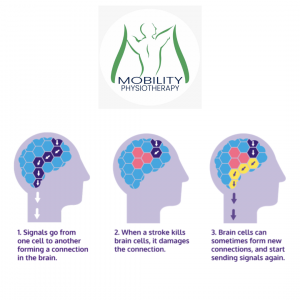
Proprioception can be affected by a number of neurological conditions, such as strokes, multiple sclerosis, Parkinson’s disease and spinal cord injuries. Damage to the nerves outside the brain and spinal cord, such as in peripheral neuropathy, can also reduce the information reaching the brain.
Joint injuries, pain, swelling and fatigue may affect proprioception too. Some people may struggle to recognise where a limb is unless they look directly at it. Others may find their balance or coordination is affected, particularly in low light or when walking on uneven ground.
The impact varies depending on the cause and severity of the problem.
How is proprioception assessed?
Your physiotherapist may use a range of simple tests to understand how well your body senses movement and position.
- Joint position testing: With your eyes closed, your physiotherapist may gently move a finger, toe or limb into a particular position and ask you to identify the movement or match the position with another limb.
- Coordination exercises: Tasks such as touching your nose with your finger or sliding your heel along your opposite shin can help assess how accurately you control your movements.
- Balance and walking tests: Your physiotherapist may assess standing, walking and changing direction, sometimes comparing performance with your eyes open and closed. These tests assess how different sensory systems work together, rather than proprioception alone.
How can physiotherapy help?
Rehabilitation aims to improve how you use sensory information and make everyday movement safer and more controlled. Treatment is tailored to your individual needs and may include:
- Position-matching exercises: Practising moving a limb into a particular position and learning to recognise where it is, initially with your eyes open and then, where appropriate, with your eyes closed.
- Balance training: Practising standing, reaching or stepping in a safe environment to challenge your body’s ability to maintain stability.
- Coordination exercises: Repeating controlled movements, such as reaching for objects or placing your feet accurately during stepping exercises.
- Functional practice: Working on meaningful daily activities, such as walking, climbing steps or handling objects, so that improvements can transfer into everyday life.
Exercises can be gradually made more challenging as your ability improves. Your physiotherapist will ensure they are appropriate for your balance, strength and safety.
The key message
Proprioception is an important part of how we move without constantly watching our bodies. When it is affected, activities that once felt automatic can require much more concentration.
Although recovery depends on the underlying condition, physiotherapy can help you practise movement, improve coordination and develop strategies to manage difficulties with body awareness. The aim is to help you move with greater confidence, safety and independence.