
Sleep Systems
Sleep systems come in many forms and can include a specialised bed, mattress, sheets and positioning aids that aim to support many people with neurological conditions. They can be used for both children and adults and go beyond just comfort.
There are many aims of a sleep system which include:
- To improve sleep quality– Many sleep systems I’ve used have specialised sheets and mattresses that both help distribute weight and manage body temperature to decrease disruptions through the night.
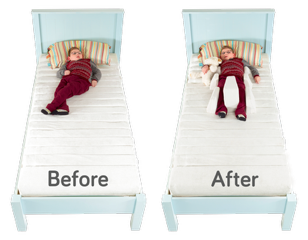
- To optimise positioning– Sleep systems often include different sized positioning blocks that place the limbs in more optimised positions. For example, if a patient has adductor spasticity (pulling theirs legs inwards, often crossing over) a block may be placed between their knees to prevent this (below).
- To prevent and manage contracture/spasticity– Patient who have slept in abnormal positions for a long time may have contractures whereby their tendons have shortened, causing an abnormal limb position. Effective sleep systems can create a more optimised position overnight putting the limb on a slight stretch for many hours or at least prevent the contracture getting worse.
- Prevent pressure sores– A lot of neurological patients suffer from pressure sores which are usually caused by prolonged pressure being put through isolated areas of their body e.g sacrum, heels, inner knees. Naturally, we reposition ourselves many times during the night but people with neurological conditions or illnesses in general find this difficult which increases the chance of sores. Particularly if they have altered body positions, they may inadvertently place increased pressure through certain area. A good sleep system helps to distribute weight more effectively and prevent these occurring.
- Reduced care giver burden– As they support the position of the patient throughout the night, carers/family are less likely to have to repeatedly assist the patient with repositioning throughout the night.
- Help support respiratory function overnight– More optimised positioning can allow their lungs to function more effectively.